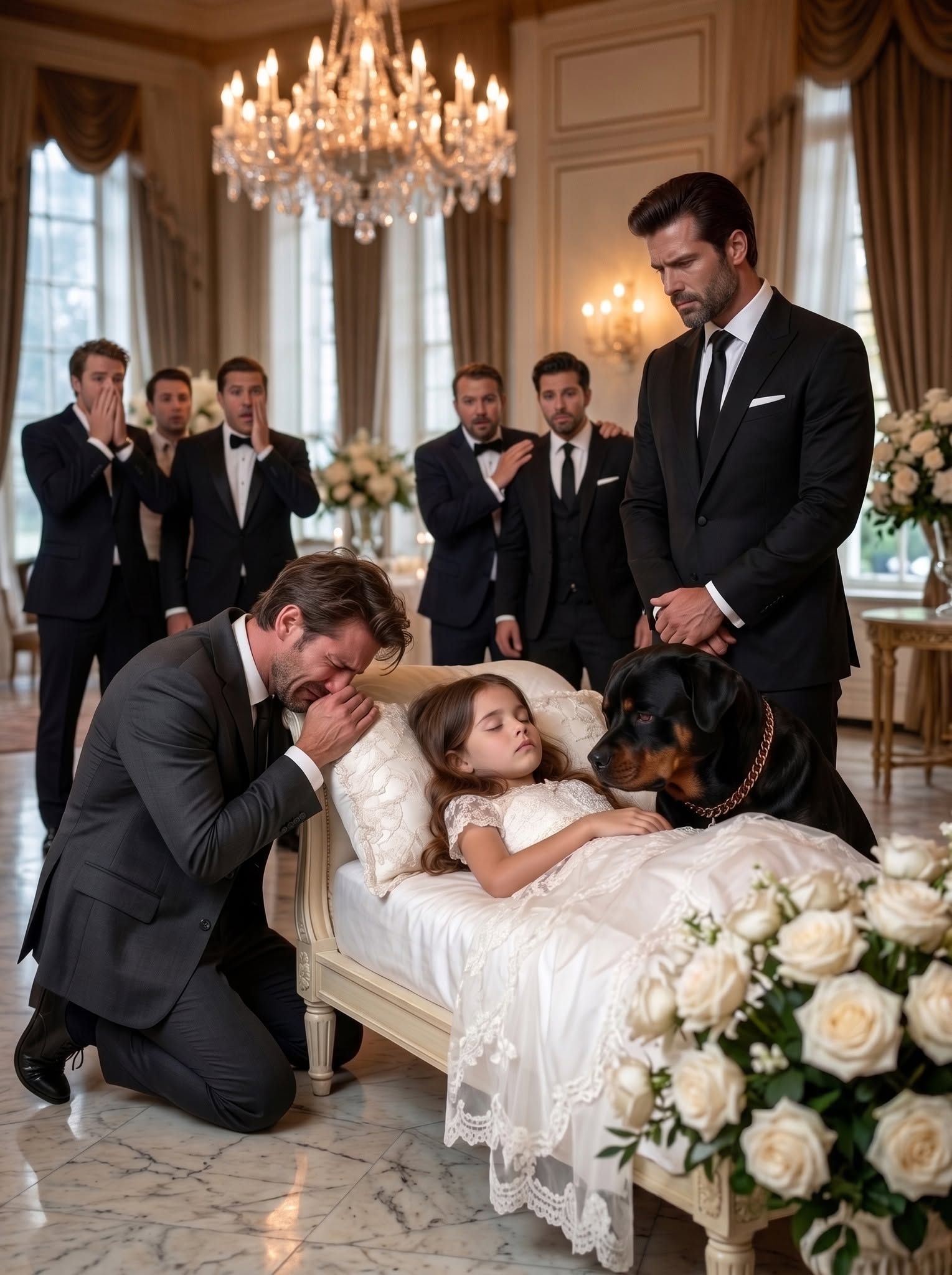
The air inside the San Mateo Funeral Home smelled of stale lilies, melting beeswax, and the damp, metallic scent of cold copper from the radiator in the corner. It was a suffocating cocktail, designed to mask the inevitable decay of flesh, but to a man who had spent thirty years navigating the dark underbelly of Queens, it smelled like defeat.
I stood in the entryway of the viewing parlor, my polished leather shoes silent against the thick burgundy carpet. Outside, Northern Boulevard hummed with the indifferent spray of late October rain against asphalt, but inside, the silence was total.
It was not a respectful silence, the kind that naturally settles over grieving families when the weight of loss becomes too heavy for speech. It was a dense, artificial stillness—the kind that takes hold of a room when men with loaded handguns under their tailored coats are trying very hard not to breathe too loudly.
In the front row, Tomas Vasquez sat with his head bowed so low his nose nearly touched his knees. His hands, rough and permanently stained with garlic and olive oil from his kitchen at La Estrella, were clasped together so tightly the knuckles bled white. Beside him, his wife Rosa was a shadow of a woman, her eyes stared unblinkingly at the small white box resting under two soft spotlight lamps at the head of the room.
The coffin was tiny. That was the first cruelty of it. A child’s coffin looks less like a final resting place and more like an oversized jewelry box. Resting on the polished mahogany lid was a faded plush bunny with one embroidered eye missing, its synthetic fur matted from years of being squeezed by small, sticky fingers.
Elena Vasquez. Seven years old. A child who used to run between the tables of her father's restaurant in a bright yellow denim jacket, giving plastic rings to the regulars and drawing crooked pictures of horses to tape behind the cash register.
Tomas owed my family forty-two thousand dollars. It was a simple business loan, taken out three years ago to fix a collapsed roof over his kitchen. He paid two hundred dollars every Monday, like clockwork, accompanied by a loaf of fresh garlic bread and a nod of respect. He was a good man, an honest earner, and under the unwritten law of the Queens borough, that meant he was supposed to be safe.
Now his daughter was cold, lying inside six feet of white satin and brass trim.
A hit-and-run, the precinct detectives had called it. Happened three days ago at six in the evening, right at the corner of 108th Street and Corona Avenue. The vehicle—a dark, full-sized pickup with tinted glass—had mounted the curb, struck the child as she stepped off the sidewalk holding a paper bag of sweet bread, and vanished toward the Grand Central Parkway without ever hitting its brakes.
"Tragic," the local precinct captain had told me over a private espresso in the back of my club the next morning. "Street camera was knocked out by a utility truck an hour earlier. No witnesses who saw the plate. A ghost car, Don Carmine."