The first thing Margaret Whitcomb destroyed was the tray of peach cobbler, and somehow that bothered Samuel Carter more than the shattered glassware scattered across his patio. The aluminum bat came down through the foil-covered pan with a wet metallic crash, spraying crust, peaches, and cinnamon across the white linen table that had been prepared for people who would arrive in less than forty minutes. Samuel stood several yards away beside the brick steps of his own home, hands open at his sides, watching a sixty-year-old woman reduce a quiet family gathering to wreckage because she had decided he did not belong there. When Margaret finally lowered the bat and reached for her phone, she looked almost relieved, as though calling 911 would turn her assumptions into facts.
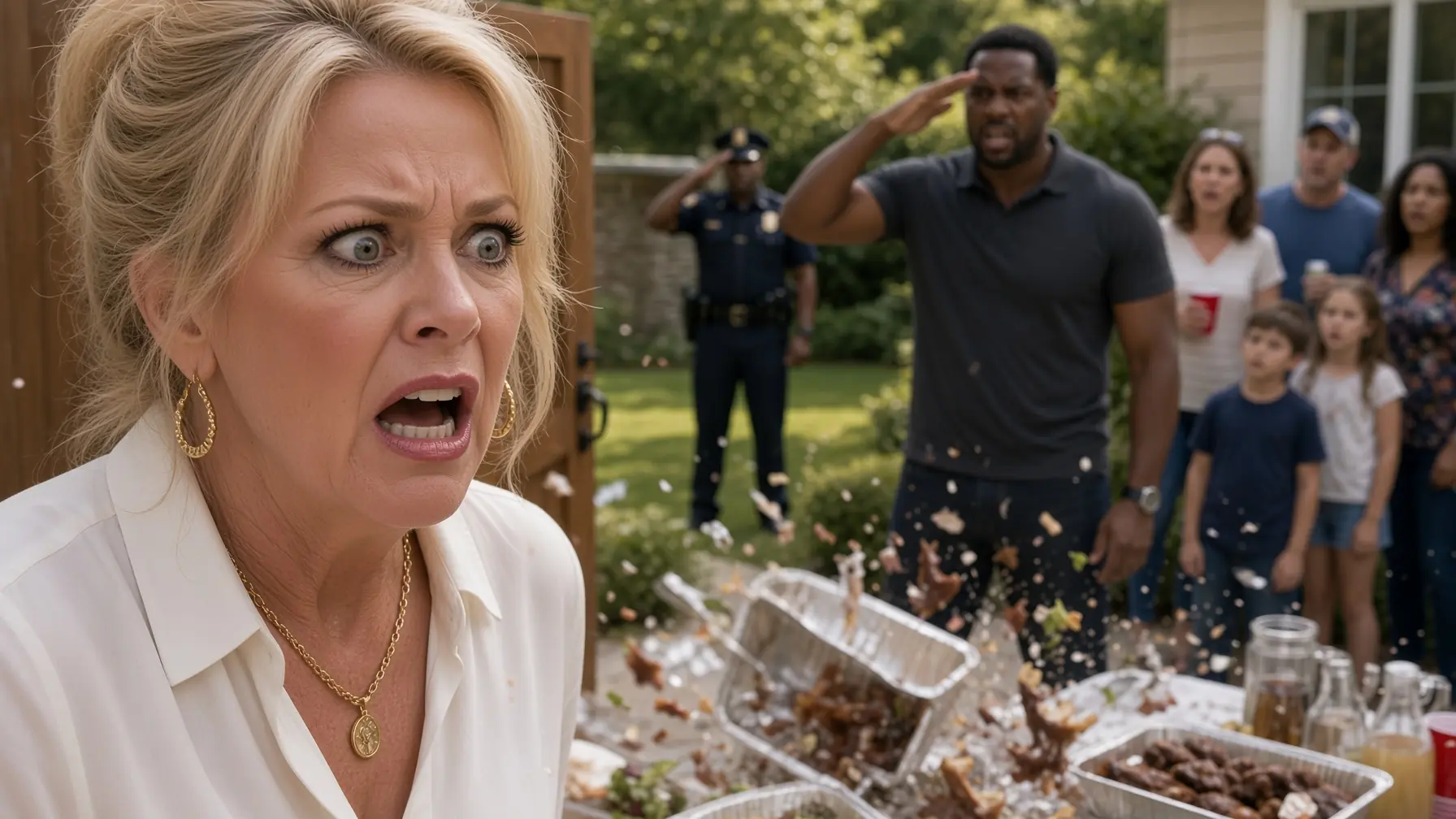
“My neighbor’s property has been taken over by some man I don’t know,” she told the dispatcher, breathing hard enough to make the situation sound more dangerous than it was. “He’s refusing to leave, he’s acting aggressive, and I need officers here before this gets worse.” Samuel could hear enough of the conversation from where he stood to understand exactly what she was doing, but he made no attempt to interrupt her or approach the phone. He simply looked at the broken serving dishes, the toppled floral arrangement, and the handwritten card that had fallen face-down into a bowl of macaroni salad.
Twenty minutes earlier, the backyard had looked almost exactly the way Elaine Carter would have wanted it. White tablecloths covered three folding tables beneath a canopy of old oak branches, blue hydrangeas filled low glass vases, and a caterer had arranged fried chicken, collard greens, cornbread, deviled eggs, sweet potatoes, peach cobbler, and a lemon pound cake according to recipes Elaine had collected over forty-six years of marriage. There were no speakers, no hired band, and no giant celebration sign, only framed photographs showing Elaine as a young Army nurse, a mother holding two sleepy children, a grandmother laughing at a beach, and a silver-haired woman standing beside Samuel in front of a lake. The gathering was supposed to mark what would have been Elaine’s seventieth birthday, the first birthday since her death nine months earlier.
Samuel had almost canceled the lunch three times. He had spent most of his adult life making decisions under pressure, yet grief had turned ordinary choices into problems no amount of discipline could solve, and the thought of sitting beneath the oak tree while relatives told stories about Elaine frightened him more than speeches before thousands of soldiers ever had. His daughter Renee finally told him the gathering was not about demonstrating strength, and his son Daniel reminded him that their mother would have considered canceling a catered lunch because of sadness an unforgivable waste of food. So Samuel agreed, ordered too much of everything, and arrived outside at ten that morning to arrange the final details himself.
At sixty-seven, Samuel did not look like the kind of man whose photograph had once appeared behind podiums at Pentagon briefings. He wore tan chinos, a pale blue button-down shirt with the sleeves rolled neatly to his forearms, brown walking shoes, and a charcoal cardigan Elaine had bought him because she said retirement should finally teach him that clothing could be comfortable. His hair was closely cropped and almost entirely silver, while a narrow scar near his left temple remained from an accident most people assumed had happened in combat even though he had received it falling from a bicycle at twelve. Without a uniform, staff, military vehicle, or entourage, he looked like what he wanted to be that morning: an older widower trying to arrange his wife’s favorite food before his family arrived.
Samuel and Elaine had purchased the stone colonial on Alder Ridge Lane less than five months earlier. They had planned the move together after Samuel finally retired from the Army, choosing Ashford Meadows in northern Virginia because Renee lived twenty minutes away and Elaine wanted more time with grandchildren she believed were growing faster than the calendar allowed. The cancer diagnosis came during the inspection period, but Elaine insisted they complete the purchase because she wanted Samuel to have somewhere that did not feel designed around his former job. She died before spending a single night there.
Samuel moved in alone three months after the funeral. Most neighbors knew only that the property had been sold through the Carter Family Trust and that contractors had spent several weeks repainting rooms, repairing the porch, and adapting one bathroom because Elaine had expected chemotherapy to reduce her mobility. Samuel avoided introductions during the first weeks because grief made polite conversation exhausting, and he spent long stretches traveling between medical paperwork, military retirement obligations, and visits to his grandchildren. That quiet arrival created enough empty space for people to invent their own explanations.